


Sudan Gyawaly, Area IPM Advisor, Northern Sacramento Valley
Background and pest biology
Over the past few years, Sacramento Valley Orchard Advisors have received several calls about flatheaded borer damage concerns in walnut orchards. While most of those farm visits were found to be unrelated to flatheaded borer, it certainly underscored the need for awareness and accurate diagnosis of flatheaded borer and other problems.
Pacific flatheaded borer is an important wood-boring beetle pest of walnuts. This beetle belongs to the family Buprestidae and is also called a jewel beetle because of its shiny, metallic appearance in adults. The name “flatheaded borer” comes from its larval stage, which appears to have a greatly enlarged and flattened head (Figure 1).
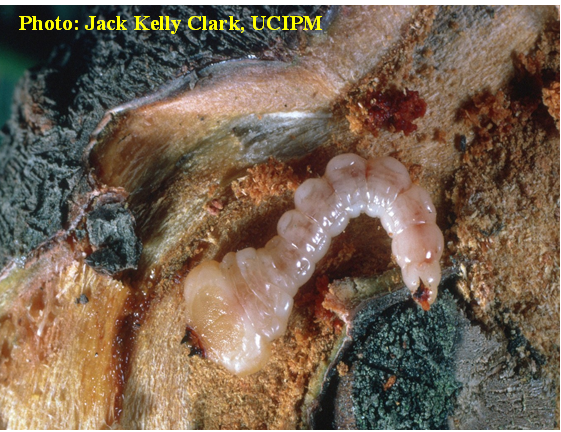
Figure 1. Flatheaded borer larva. Photo credit: Jack Kelly Clark
Flatheaded borer typically has one generation per year in the Central Valley. Adults emerge from late spring through summer, leaving a D-shaped exit hole. Females lay eggs on the trunk and branches, often in bark cracks and crevices. After hatching, larvae feed just under the bark in the cambium layer, creating tunnels that are often filled with sawdust-like frass, and may bore deeper into the wood as they mature. The insect survives the winter as mature larvae within young trunks and branches before turning into pupae in early spring and emerges as an adult beetle.
Flatheaded borers, like other wood-boring beetles, are usually associated with stressed trees. Stress can result from drought, sunburn, soil issues, or other factors. However, once populations become high, borers may also infest healthy trees, leading to orchard decline.
Identifying flatheaded borer damage and activity
Flatheaded borer infestations often go unnoticed until damage is severe. Injury can be confused with other causes of tree stress or decline, which may delay timely response. Prompt identification of beetle infestations is critical to prevent this pest from becoming a serious problem.
Common signs of infestation include flagged or dead branches, most often in the upper canopy where weakened limbs may break. Other indicators include cracked or rough bark (Figure 2a) and oozing sap at infestation sites (Figure 2b). When bark is peeled back, feeding tunnels filled with fine sawdust (frass) may be visible, and cream colored flatheaded larvae may be present within the tunnels.
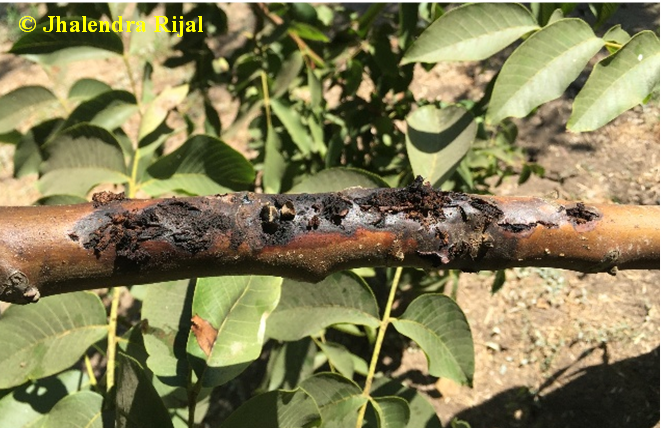
Figure 2a. Flatheaded borer feeding damage showing cracked or rough bark
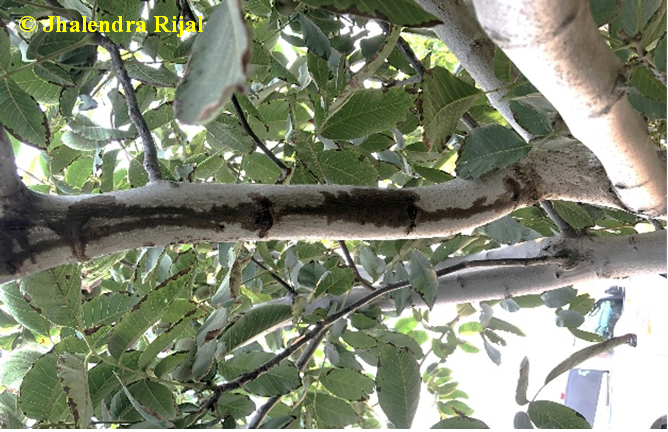
Figure 2b. Flatheaded borer feeding damage oozing sap at infestation site. Photo credit: Jhalendra Rijal
Commercial traps are not yet available for this pest in walnuts. Several years of UC research in the northern San Joaquin Valley have found that custom-made yellow triangular traps can effectively attract adult flatheaded borers. These traps are four feet tall, ground-installed, and have a sticky substance applied to their exterior surfaces (Figure 3). They can be constructed from corrugated plastic panels and used as a detection tool in orchards. Instructions for making and deploying these traps is available here.
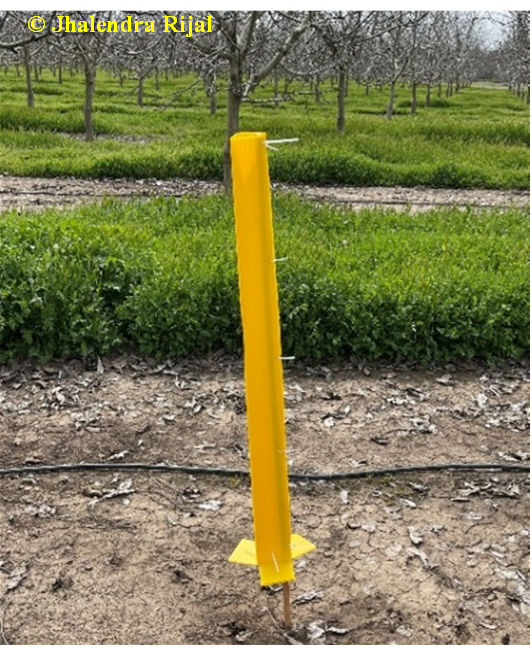
Figure 3. Custom-made, yellow triangular trap for flatheaded borer detection
Management strategies
Flatheaded borer is difficult to manage once established in an orchard, and control options are limited. In mature orchards, pruning out and destroying infested branches can help reduce population buildup and limit reinfestation. Maintaining tree health and reducing stress are key to preventing infestations, as borers are primarily attracted to stressed trees.
For newly planted trees, protecting the trunk from sunburn is critical, so paint from just below the soil line upward with interior white latex paint to protect exposed bark. Extending the paint slightly below the soil surface helps maintain protection if soil settles or erodes. In frost-prone areas, trunk painting can be adjusted to minimize potential effects on bud break.
Currently, no insecticides are specifically recommended for managing flatheaded borers in walnuts. However, studies in the northern San Joaquin Valley suggest that summer applications (late June with a follow-up application approximately three weeks later) of certain insecticides, including diamides and acetamiprid, may help reduce damage in some cases, but results have been modest, and no consistently effective insecticide program has been identified to date. For now, the best approach remains maintaining tree health, watching for early symptoms, and pruning and destroying infested branches. Growers with flatheaded borer infestation concerns can contact their local UC Cooperative Extension farm advisor for guidance and support.
Leave a Reply