


Ryan J Hill, UCCE Tehama, Shasta, Glenn Counties
Summary:
Rimsulfuron (Matrix, Hinge, Revolt, ect.) applications in early March, as johnsongrass shoots emerge from rhizomes, can be used to reduce johnsongrass coverage and vigor. Including glyphosate at this timing can provide a slight benefit, but since the available leaf surface area is so small, minimal herbicide is taken up by the weed. Rimsulfuron has soil residual activity and is able to move down into the roots and rhizomes of the johnsongrass and provide substantially better control than glyphosate, at least at the early March timing.
Note: the mention of products is not a pesticide recommendation, simply the sharing of research results. Products may not be registered for use in California. Consult your PCA and always read the pesticide label; the label is law.
Research methods and results:
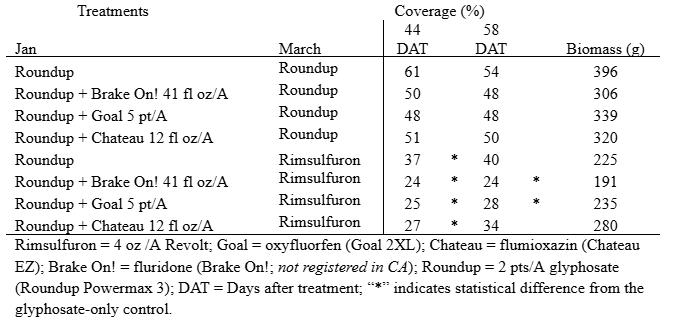
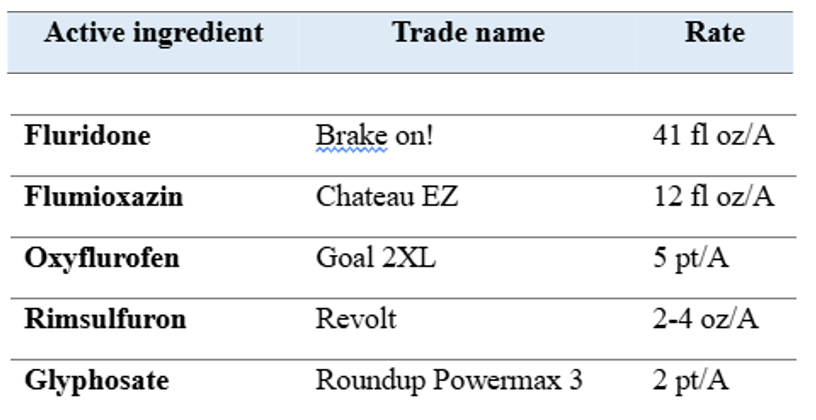
Orchards with established johnsongrass populations were treated with preemergent herbicides (Chateau EZ, Goal2xl, or Brake On!) in January and either rimsulfuron (Revolt) or glyphosate (Roundup Powermax 3) in early March as johnsongrass shoots were emerging from underground rhizomes.
Weed coverage ratings show that the winter preemergents were not very effective in reducing johnsongrass coverage, likely because most of the emerging plants at both sites were established perennials, rather than seedlings. Coverage was reduced by about 50% from the March applications of rimsulfuron. Biomass samples were collected two months after treatment, showing a 26-51% reduction in plant biomass from rimsulfuron treatments.
A second trial explored further different combinations of Roundup and rimsulfuron. Tree rows were treated with rimsulfuron (Revolt) or glyphosate (Roundup Powermax 3) or a mix of the two in early March (see the graph for rates). All treatments were applied in the presence or absence of a winter-applied preemergent herbicide (Goal 2XL; 5 pt/A) that is effective on johnsongrass seedlings.
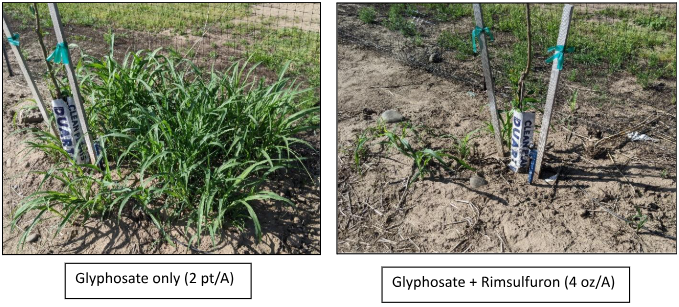
The previous trial showed a slight reduction in johnsongrass coverage associated with the winter treatments. It was not so in this case, and no effect was observed of Goal treatments on johnsongrass coverage. Again, weed coverage was reduced by about 50% from the March applications of rimsulfuron, an effect that was maintained through two months after treatment. Biomass samples were also collected, showing a non-significant reduction in plant biomass (57-76%) from rimsulfuron treatments.
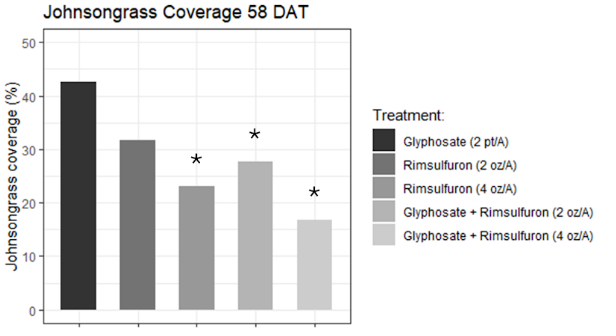
Figure 1: Goal 2XL applications in January did not affect weed coverage, so data were combined for this graph, showing more clearly the effect of the spring treatments.
Conclusions:
These results together seem to suggest that a winter application of preemergent herbicide may not benefit johnsongrass control, though it is interesting that the two treatments that maintained low coverage in the winter trial included Goal 2XL and Brake On (Brake On is pending registration in CA for orchard use). These two products have activity on johnsongrass seedlings, while Chateau does not.
Regardless, rimsulfuron treatments made the biggest contribution to the observed reduction of biomass and coverage of johnsongrass. The application of winter preemergents suggest that this treatment was active on rhizomes and not just the new seedling emergence. All spring treatments were applied when the weeds were newly emerged from the belowground rhizomes, but most of the treatment was not contacting leaves, but was rather deposited on the soil surface. This was then watered in by rain events that may have moved the product down in the soil profile to affect the rhizomes themselves. The most effective treatment was a March application of 4 oz of rimsulfuron with 2 pt of glyphosate.
Application details:
Spray volume was 20 gallons per acre, delivered with a spray boom equipped with three AIXR11002 nozzles. Treatments were broadcast over the full plot area, about 180 square feet. January and March treatments were followed by a rain event within 7 days of application. All March treatments included 2% ammonium sulfate and 0.5% nonioninc surfactant and were applied when weeds were just emerging (1-5 inches tall).
Products used:
Leave a Reply