


Clarissa Reyes, Orchards Advisor, Sutter-Yuba, Butte, Placer counties
Marcelo Bustamante, Postdoctoral Researcher, UC Davis
Akif Eskalen, UCCE Specialist in Plant Pathology
adapted from an article in Yuba-Sutter Farm Bureau Crop Talk Magazine, Vol. 19 No. 9
Kiwifruit is making a strong comeback in Yuba county – in just one year, its value jumped from $12.4M in 2022, ranking 5th among the county’s agricultural commodities, to $51.6M in 2023, making it the second-highest valued crop (Yuba County Crop Reports). With more acres reaching full production, it is critical to keep kiwi vineyards healthy and productive for long term.
Towards the end of the 2024 growing season, UC Cooperative Extension (UCCE) Orchards Advisor Clarissa Reyes began receiving calls from growers reporting dieback symptoms in their vines, less shoot growth, small/yellow leaves, vine cankers, and in more severe cases, cane and cordon dieback (see pictures). The samples were processed by Dr. Akif Eskalen’s diagnostic lab at UC Davis, which identified several fungal pathogens commonly associated with vine canker and dieback diseases in woody plants.
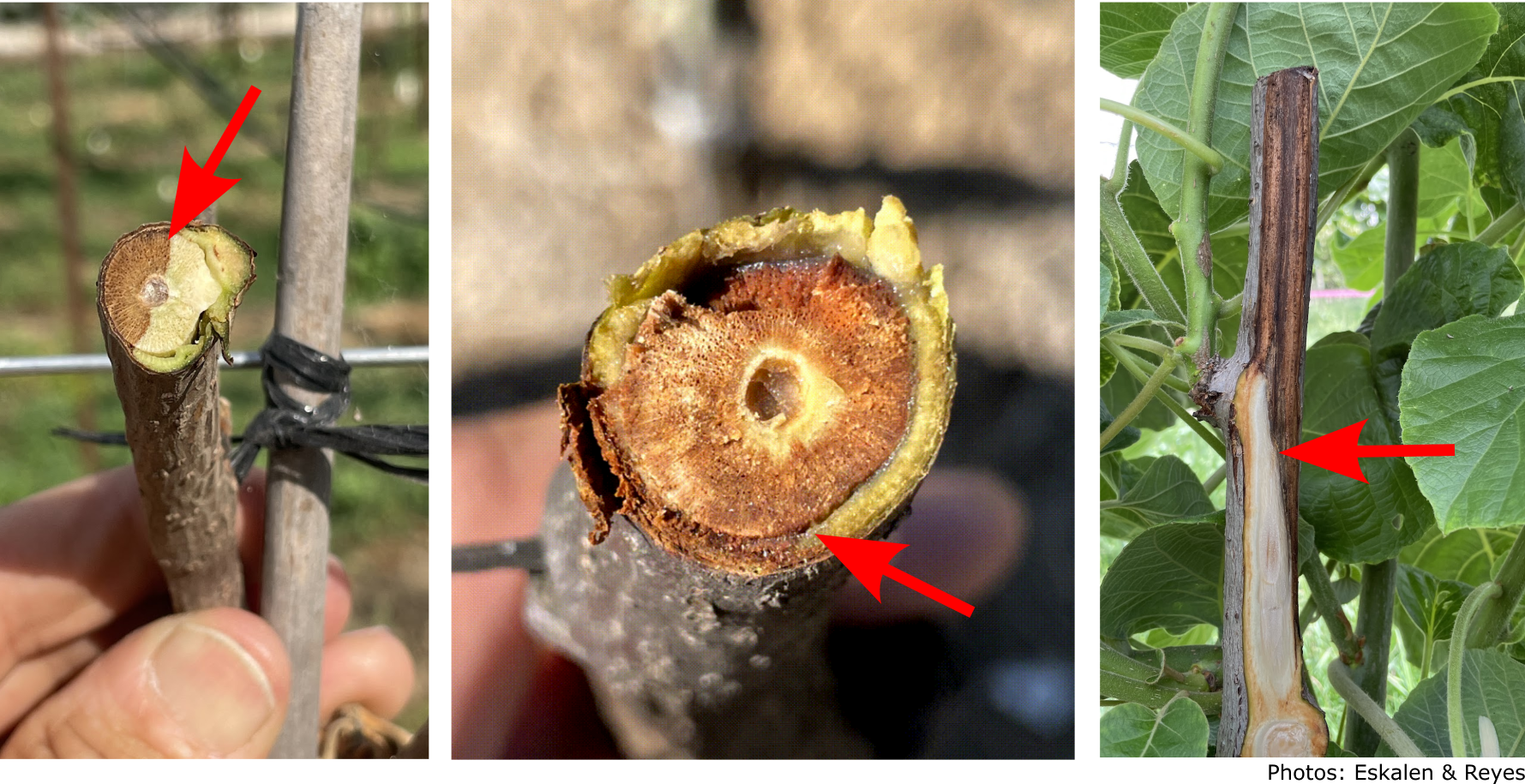
Cane cankers: live tissue = white and light green, dead tissue = dark brown. Arrows indicate canker margins
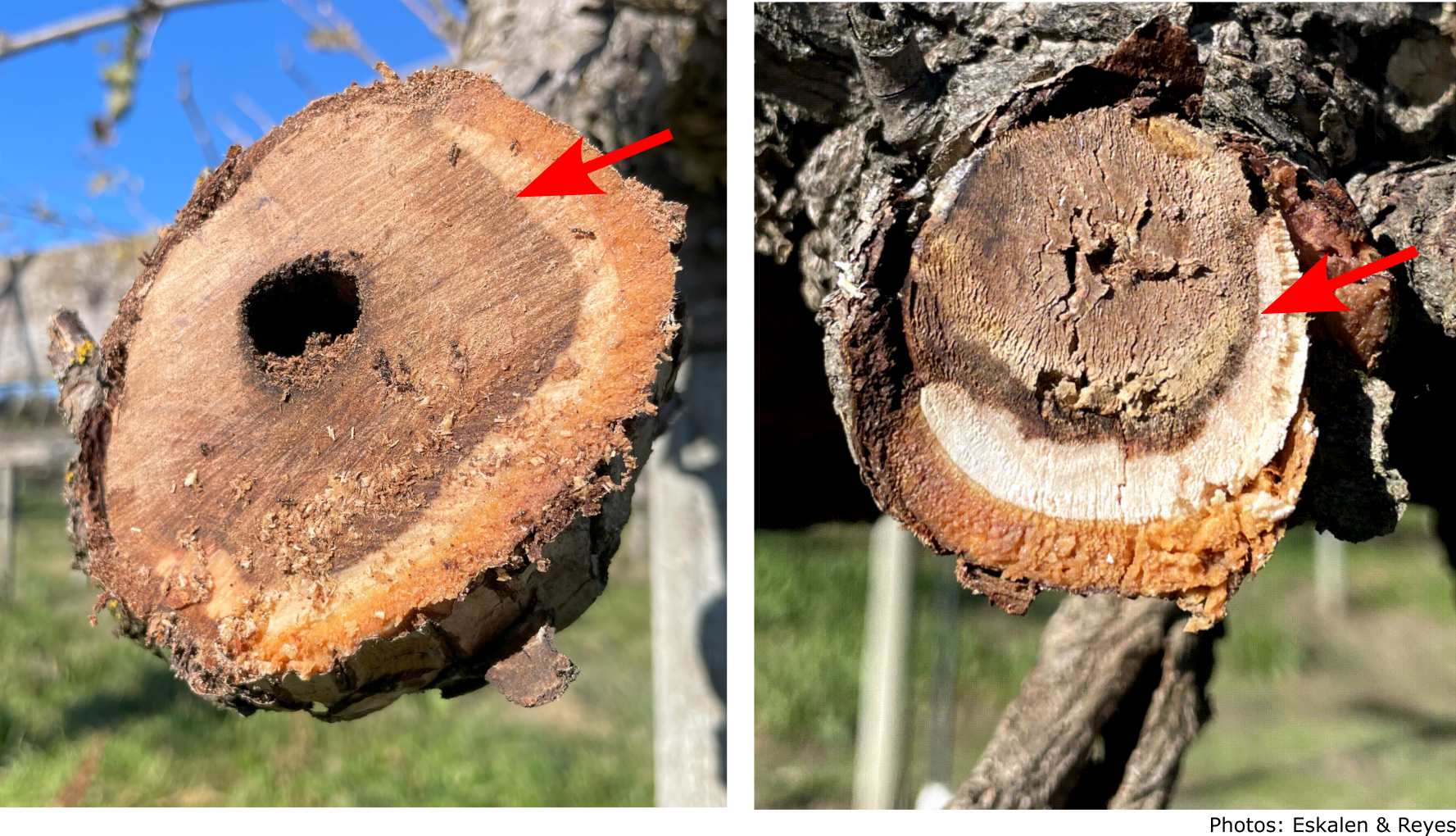
Cordon cankers: live tissue = white and light brown, dead tissue = dark brown. Arrows indicate canker margins
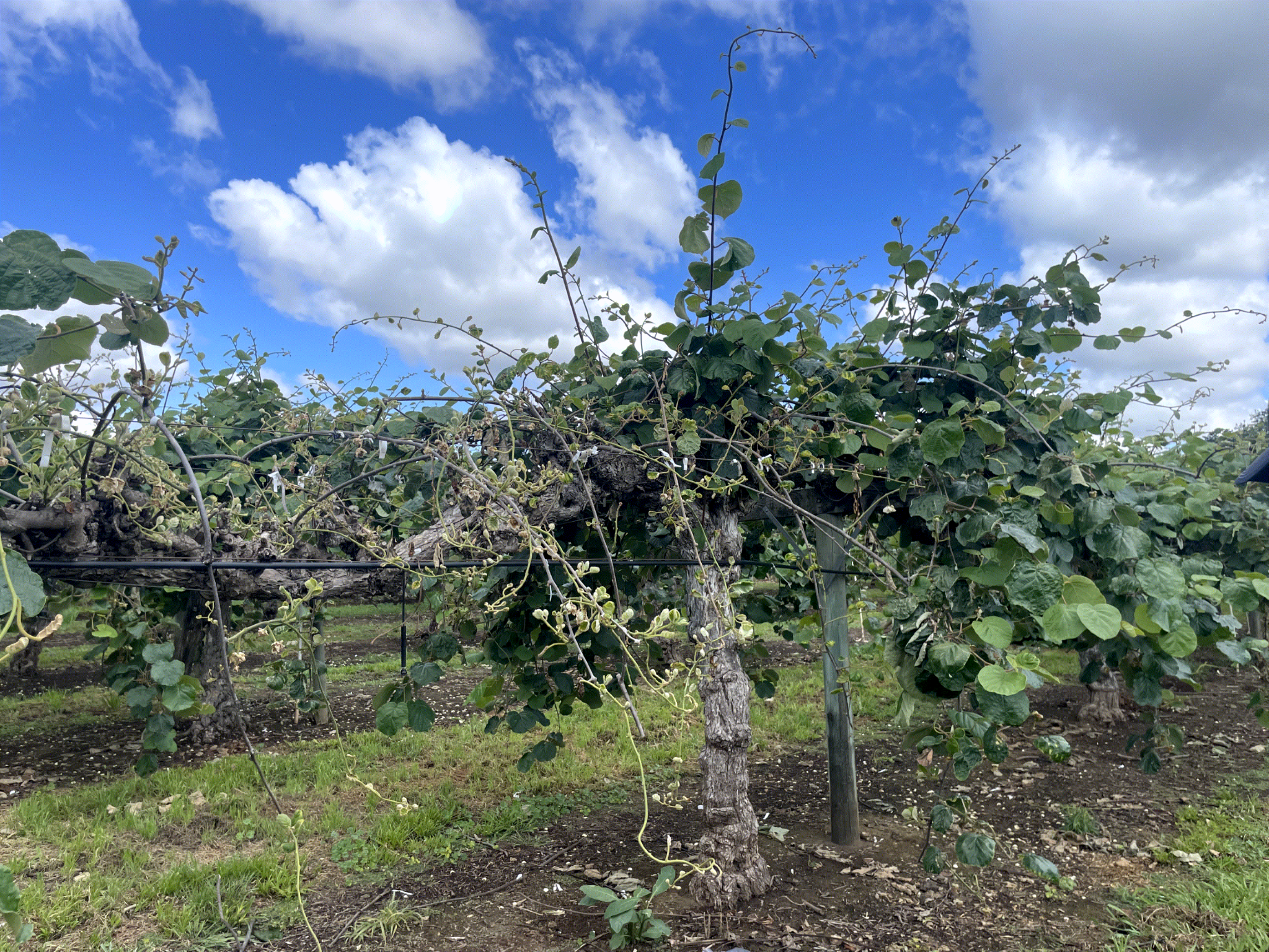
Infected vine: weak shoots with small leaves on left side of the vine, normal growth on right side
However, detecting a fungus doesn’t automatically mean it’s the cause of disease. To confirm whether these fungi are pathogenic (cause disease) to kiwifruit, we’re conducting ongoing pathogenicity tests in collaboration with local growers. These tests will also help to determine how aggressive each fungal isolate is, which is essential information for developing effective management strategies.
The primary concern with fungal canker pathogens is their ability to spread through precipitation, splashing irrigation water, wind and fog. These pathogens infect vines through wounds or mechanical injuries. They can also be spread on tools that have become contaminated by infected vines. In kiwi vineyards, hundreds of pruning cuts are made on dormant vines each winter to manage the next season’s growth and fruit production. Unfortunately, this essential practice also creates numerous new wounds that are highly susceptible to infection.
Once a vine is infected, the pathogens kill plant tissue and cause cankers that progressively reduce the vine’s ability to bear fruit. Without management, cankers can advance toward the main trunk, resulting in vine death. In late stages of the disease, pathogens produce abundant spores that emerge from dead wood, which increases disease pressure in the vineyard.
Protecting pruning wounds is critical to prevent infection by canker pathogens. While products are already used to protect pruning wounds in other heavily pruned woody crops like grapevine, prune, and citrus, so far no studies have evaluated their use in kiwifruit in California. As we learn more information about the specific fungal pathogens associated with kiwi trunk diseases, UCCE aims to work with growers and the CA kiwifruit industry to provide a sustainable control strategy to protect pruning wounds.
In the meantime, it is best practice to remove all pruned material out of the vineyard to reduce inoculum levels, and to disinfect pruning equipment as crews move through the vines. If you notice any of the symptoms shown in the photos, feel free to contact Clarissa Reyes, UCCE Orchards Systems Advisor at clareyes@ucanr.edu or at 530-433-4301 to come for a farm call.
Leave a Reply