


Sudan Gyawaly, Area IPM Advisor, UCCE Northern Sacramento Valley
Spider mites are one of the pests that can become a problem in prunes. Two-spotted spider mite and Pacific spider mite are commonly found in prunes in the Central Valley. Of the two species, the two-spotted spider mite is the predominant species in the Sacramento Valley, whereas the Pacific spider mite is more common in the San Joaquin Valley.
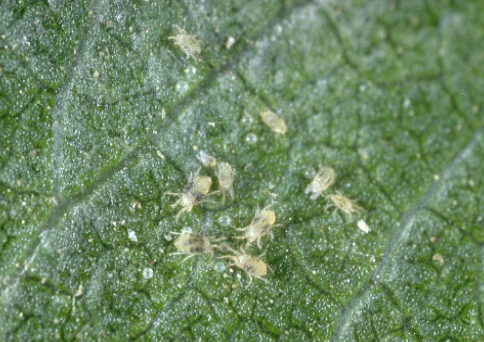
Figure 1: Twospotted spider mites
Adult spider mites have a dark spot on each side of their body during periods of active feeding. Spider mites lay spherical eggs often found on the undersides of leaves. Female spider mites turn reddish orange in the fall before overwintering in protected areas such as leaf litter, tree bark, or nearby weeds.
Nature of Damage.
Spider mites infest leaves by puncturing plant cells and sucking out cell contents, that causes stippling leading to mottling and browning of leaves. The feeding by spider mites weakens the plant and can reduce fruit size. If infestations are severe, especially early in the season, they can lead to significant leaf loss, leading to sunburn damage.
Monitoring and Treatment Decision.
While it may seem like extra work, monitoring spider mite populations is critical to ensure that treatment interventions are made only when necessary and not too late. Begin monitoring spider mites weekly starting June 1.
Spider mite monitoring and treatment decisions in prune orchards involve three main steps.
First, select two monitoring spots within each orchard block (up to 40 acres in size).
Second, conduct a timed search for five minutes at each place, resulting in a total of ten minutes of observation per block.
Third, at each spot, examine leaves on ten different trees, checking two to three leaves per tree. This results in about 20 to 30 leaves observed at each monitoring location. Be sure to inspect both the inner and outer canopy of the trees. Record presence or absence of spider mites and their natural predators. This monitoring form, available on the UC IPM website, can be used to record weekly observations and provides useful information on how to rate pest mite and predator populations and make treatment decisions.
Miticide treatment is recommended if either of the following conditions is met during at least one of the five-minute monitoring checks: if mite levels are low to moderate and predator levels are also low to moderate, or if mite levels are moderate to high, even when predator levels are moderate or high.
Managing spider mites.
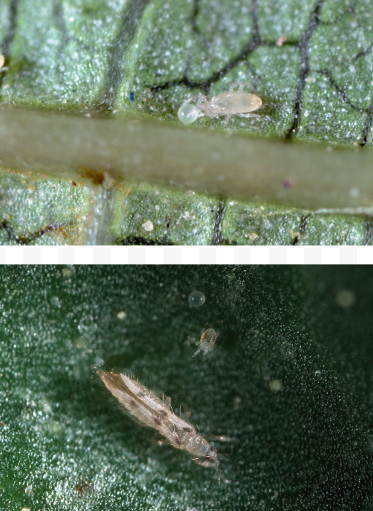
Figure 2: Two common spider mite predator species: western predatory mite (top) and sixspotted thrips adult (bottom)
Predators such as western predatory mites, sixspotted thrips (Figure 2), and spider mite destroyer beetles play an important role in keeping spider mite populations in check. Adult predatory mites are pear-shaped, about 1/70 inch long, and are translucent to white or the color of their prey. Predatory mites are broader at the rear (vs. spider mites are wider at the front) and are actively running on leaves. Adult sixspotted thrips are about 1/8 inch long, pale yellow to whitish insects with long, hairlike fringes on the margins of their wings. They have three dark spots that are apparent on each whitish forewing at rest. The immatures do not have wings. Protecting these predators is critical for an integrated pest management strategy. Avoid using broad-spectrum pesticides such as pyrethroids whenever possible.
Good orchard health is important in minimizing severe spider mite problems. Keeping trees well-irrigated and vigorous makes them less susceptible to mite infestations. Additionally, minimizing dust is key– oiling orchard roads and maintaining ground cover helps reduce dust, which disrupts natural predators that keep mite populations in check.
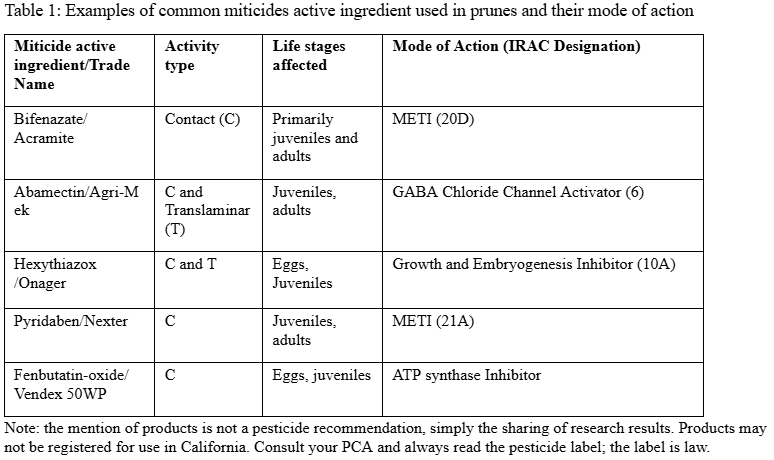
Miticides listed in the UC IPM guidelines (see Table 1 below) for prunes provide good mite control when used according to label recommendations. Most miticides are effective in contact, so good coverage of the tree canopy is critical. Miticides, which are active primarily on egg and larval stages, are usually applied before adult mite numbers build up in high numbers. Furthermore, due to concerns about resistance, miticides of a similar mode of action should not be used consecutively or more than once per year. The table below provides more information on some common miticides, their mode of action, activity type, and the life stage of mites they affect.
Leave a Reply