Roller Crimping – A Cover Crop Termination Option
Annie Edwards and Margaret Smither-Kopperl with the USDA recently released a report on termination using a roller crimper in orchard systems. Continue reading


Your source for orchard news & information in the Sacramento Valley

Annie Edwards and Margaret Smither-Kopperl with the USDA recently released a report on termination using a roller crimper in orchard systems. Continue reading
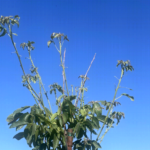
Autumn freeze damage in walnuts can occur when trees experience freezing temperatures prior to going into dormancy. Since 2018, we’ve learned management practices that can prevent widespread damage. Continue reading
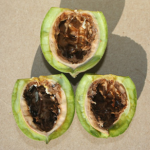
Ethephon, also known as Ethrel®, is an ethylene-based plant growth regulator applied at walnut maturity, or shortly thereafter, which accelerates hull cracking and separation from the shell. This advances walnut harvest by four to seven days, depending on the season and variety, and nut value is increased by lighter kernel color and possibly less insect damage. Continue reading
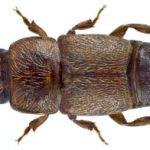
UC IPM has released a new resource to help identify carpophilus beetle Continue reading
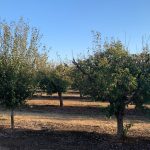
Your orchard is an investment – the longer it remains a productive, high-yielding orchard the higher your return on that investment Continue reading
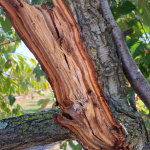
California’s prune industry faces a significant challenge: a decline in orchard lifespan. A primary disease culprit associated with premature orchard decline is the loss of fruit-producing scaffolds likely caused by the heart rot fungus Phellinus pomaceus (formerly called P. tuberculosus). Continue reading
The three most important management decisions dictating fruit size and crop size (and therefore grower returns) are 1) cropload management, 2) irrigation, and 3) nutrient management (especially potassium). Continue reading
Sustainable net return to grower is the measure of success in farming. Because profit margins shrink with increasing costs, small income increases (that don’t impact overall orchard health) can have major benefits to an operation’s bottom line. Continue reading
Clarissa Reyes, Orchard Systems Advisor, Sutter-Yuba, Butte & Placer Countie Jaime Ott, UCCE Tehama, Shasta, Glenn & Butte Counties Becky Wheeler-Dykes, UCCE Glenn, Colusa & Tehama Counties In February 2024, the Sutter-Yuba and Tehama Walnut Day meetings featured panel discussions … Continue reading
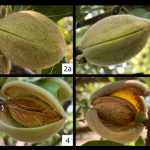
Historically, the recommendation from UC almond experts for the ideal time to shake was as soon as 100% hull split occurred throughout the orchard, however, these considerations vary widely among varieties and locations. Potential challenges that growers should consider when timing harvest include pest and disease management, nut removal/drying time, and nut quality. Continue reading
Rising production costs continue to squeeze profit margins for prune growers. The five percent rule can be an effective principle for improving profits, advocating for small improvements across multiple aspects of an operation rather than striving for large gains in one or two areas. Continue reading
Carpophilus beetle (Carpophilus truncatus) is a small insect that causes severe damage to almond kernels. Humid conditions increase the emergence and rate of development, leading to multiple generations within a season. Continue reading
Franz Niederholzer, UCCE Farm Advisor, Colusa and Sutter/Yuba Counties Sudan Gyawaly, UC IPM Advisor, Sacramento Valley David Haviland, UCCE Entomology Advisor, Kern County Hull split for the 2024 almond crop is just ahead. Successful hull split spraying lowers NOW damage … Continue reading
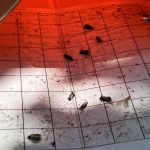
The SacValleyOrchards team has started posting pest monitoring reports/updates for major walnut and almond pests for our region Continue reading
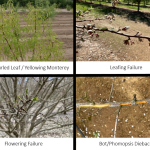
Over the past eight years, Sacramento Valley growers have encountered challenges managing Monterey almond trees: yellowed curled leaf, leafing failure, flowering failure, and Bot/Phomopsis dieback. Continue reading