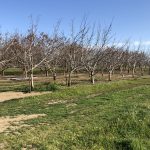
Twelve ways to ruin a prune orchard.
Good production of large fruit and sustained tree health are critical to maintaining profitable production. The following points highlight problems contributing to orchard decline. Continue reading
Your source for orchard news & information in the Sacramento Valley

Good production of large fruit and sustained tree health are critical to maintaining profitable production. The following points highlight problems contributing to orchard decline. Continue reading

Bloom date and cropload per tree still have the largest influence on harvest date and fruit size potential, but knowing GDH30 accumulation can be used to fine tune harvest and thinning planning. However, given cooler weather in the 30 days following 50% full bloom, knowing growing degree hours can better inform thinning planning. Continue reading

The extremely wet winter this year has likely helped growers to kill more overwintering navel orangeworms (NOW) than in warmer and dryer winter years. However, a wet, cold winter will not kill all NOW, and being complacent might result in a bad NOW year. Continue reading

There is no more important activity in prune growing than checking the crop load in late April (or early May this year?). Knowing the crop load (fruit/tree) in an orchard is the most critical piece of data needed to decide if shaker thinning is needed. Continue reading

A careful approach to irrigation in 2023 is one way to both save money and help ensure you have a healthy and productive orchard. Continue reading

More details on the examples in “Healthier Orchards with A Careful Start of Irrigation in 2023.” Continue reading

Sensitivity to a lack of nitrogen will vary from orchard to orchard. We know that trees have much more nutrient storage capacity than annual crops, but how much of this can be relied upon to meet nitrogen demand, and when might it not be appropriate? Continue reading

Reducing weed control in orchards during difficult economic times is possible but comes with some tradeoffs. It’s useful to step back and remember why we’re controlling weeds in the orchard in the first place. Continue reading

Determining the priority for pesticide sprays for insect pests is challenging. Integrated pest management uses cost/benefit analysis to guide growers and farm managers in making pest control decisions. Continue reading

Selecting a rootstock when developing an orchard is a decision that will impact tree health and yield for the rest of the life of the orchard. Read more to learn what the University of California has learned from decades of testing rootstocks to understand their limitations. Continue reading

Crop failure in years with extreme bloom weather (cool or hot) challenges successful prune growing in California. A new bloom weather model is a good starting point to predicting crop potential and, eventually, managing risk of crop failure. Continue reading

Walnuts are one of the highest chill requirement tree crops in California but recent winters have fallen short of the chill needed for a tight, economical walnut bloom. With funding from the California Walnut Board, dormancy breaking treatments are being tested in California’s conditions using products used to compensate for inadequate chill in other crops and countries. Continue reading

An excerpt from The Almond Doctor on a tree’s response to flooding. Continue reading

It is looking like spring outside, and prune bloom is picking up. Keep reading for prune orchard management tasks to keep in mind this month. Continue reading

Read this article for prune orchard management tasks to keep in mind in May. Continue reading