Pre- and Post-Harvest Irrigation Management in Prune
Read this article to learn more about irrigation management for prune orchards using crop developmental stages and stem water potential measurements. Continue reading


Your source for orchard news & information in the Sacramento Valley

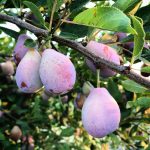
Read this article to learn more about irrigation management for prune orchards using crop developmental stages and stem water potential measurements. Continue reading
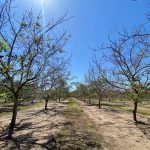
As if 2020 didn’t bring enough grief, it appears to have also brought a major autumn freeze that growers and their consultants are now taking stock of. UCCE walnut advisors in the northern Sacramento Valley and Northern San Joaquin Valley have been fielding calls in the past couple weeks regarding extensive damage in young and mature orchards. Continue reading
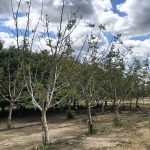
Read this article for walnut orchard management tasks to keep in mind in May. Continue reading
When prices are lean almond farming is tough business. Read this article to learn about nutrient management considerations when prices are low. Continue reading
There are several online tools and phone applications that can facilitate the process of site evaluation and planning for a new orchard. Read this article to learn more. Continue reading
Read this article for almond orchard management tasks to keep in mind in April. Continue reading
Given low precipitation this past winter and low surface water allocations, many growers may be faced with the difficult prospect of using lower quality water for irrigation this season. What should be considered before irrigating with lower quality water? Continue reading

Research findings in a Red Bluff, CA walnut orchard have seriously challenged the conventional wisdom that walnut growers should start irrigation early in the spring to save deep soil moisture ‘in the bank’ for use later in the season. Read this post to learn more. Continue reading

While it’s hard to be certain what caused the light prune crop in 2020, warm temperatures before and after bloom might have been a contributing factor. Continue reading

Walnut trees affected by Phytophthora root and crown rot and Paradox canker disease may have decreased yield and vigor for a few years before succumbing to the disease. This article provides resources for identification and control of these diseases. Continue reading
Because there is not a CIMIS station close to Yuba City, Janine Hasey calculates chilling based on a temperature recorder at the UCCE office in Yuba City. Chill data will be updated weekly. Continue reading

Bacterial blast (Pseudomonas syringe), although thankfully not a problem every year (hopefully including 2021), can be tremendously damaging to almond yields. For example, significant crop damage was reported in the Sacramento Valley in 2017 and 2018, and in the San Joaquin Valley in 2017 and 2019. These grower reports of past crop loss supported a Section 18 emergency request for the use of kasugamycin on almonds during bloom. Continue reading
A large almond crop at harvest requires good bee activity at bloom in the orchard. Read to learn more about best practices for keeping bee hives in your orchard strong and healthy at bloom. Continue reading

The aftermath of gale-force winds in the southern Sacramento Valley last week has further highlighted the importance of selecting prune rootstocks with good anchorage. In commercial orchards and trials alike, Krymsk 86 rooted prune trees consistently withstand applied force better than most other rootstocks. Continue reading
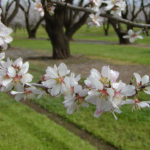
One of the motivations for making good water management decisions early in the growing season is to reduce risk of root and crown diseases that can eventually kill almond, walnut, prune, and other tree species. Early season water management influences the environment where roots grow by affecting soil temperature and aeration and can be pivotal in how much tree decline actually occurs. Continue reading