Fertilizing Almonds after a Frost
In a light crop year following frost, fertilizer savings are possible, but some fertilizer, especially N should be applied to maintain orchard health and crop potential for next year. Continue reading


Your source for orchard news & information in the Sacramento Valley

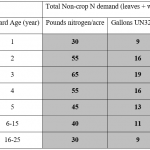
In a light crop year following frost, fertilizer savings are possible, but some fertilizer, especially N should be applied to maintain orchard health and crop potential for next year. Continue reading
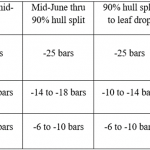
Record low temperatures on February 24 severely reduced nut set and limited almond yield across thousands of acres of orchards in the Sacramento Valley. The following are our best suggestions for irrigating to bring the remaining crop to market, and ensure good crop potential for next year. Continue reading
An April frost can have potentially devastating results. The last severe spring frost occurred in April 2008. During a frost event, there are many factors that influence whether or not frost damage will occur in a particular orchard. This article provides guidelines should a spring frost occur. Continue reading
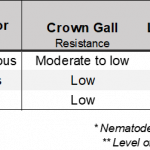
Rootstocks are the foundation of a walnut orchard. Selecting one with attributes that will tolerate or resist site problems, while providing the vigor for optimum tree performance, is key to orchard health and longevity. This article provides updates from the latest rootstock research statewide. Continue reading
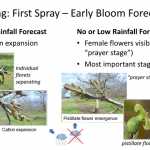
For any pest or disease like walnut blight that requires pesticide application to keep in check, there are four key pillars to successful management: timing, material, rate, and coverage. Read more for the latest updates for managing walnut blight in 2022. Continue reading
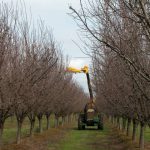
Work continues at the Red Bluff mechanical pruning trial initiated in 2019, thanks to the California Prune Board. Continue reading
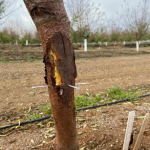
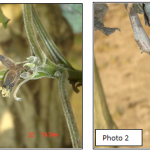
It can be difficult to know when to replace or remove tree cartons. Being too early (photo 1) or late (photo 2) with carton removal has been the source of numerous farm advisor calls over the years. Continue reading
Successful new plantings are key to the economic future of an almond growing operation. Any setbacks in new, non-bearing orchard growth or health can be costly, distracting and stressful. Weed management is a major management focus and potential stress point in young orchard development. Continue reading
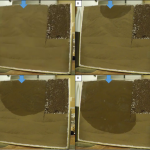
Potted nursery trees are here to stay, but they have challenges and a learning curve for growers accustomed to planting bare root trees. One of the major challenges is irrigating during the orchard’s first year. Continue reading
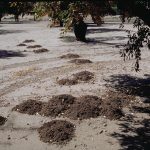
Late winter to early spring is the time of year that pocket gophers are usually cranking up their Barry White playlist. This reproductive pulse generally results in three to five young per litter, roughly doubling to tripling the population of gophers that feed on almond roots and crown. Reducing gopher populations ahead of this reproductive pulse is the most time-effective way to reduce gopher damage in your orchard. Continue reading
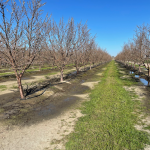
The 2021-2022 water year, which began on October 1st, got off to a promising start. Precipitation patterns brought snow to the mountains and rain to the valleys in amounts not seen for a few years. Unfortunately, a relatively dry January snapped us all out of dreams of a “normal” year and brought us back to our new (drier) reality. Continue reading

Bacterial blast (Pseudomonas syringe), although thankfully not a problem every year (hopefully including 2022), can be tremendously damaging to almond yields. For example, significant crop damage was reported in the Sacramento Valley in 2017 and 2018, and in the San Joaquin Valley in 2017 and 2019. These grower reports of past crop loss supported a Section 18 emergency request for the use of kasugamycin on almonds during bloom. Continue reading
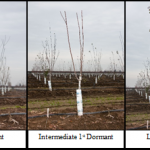
The higher the yield per acre early in the life of an orchard, the sooner the orchard covers development costs and returns a net profit to the grower. With new, well-anchored prune rootstocks now in the market, especially Krymsk 86 and Viking, it is worth reviewing young orchard pruning trial data. Continue reading

Prune prices to California growers are influenced by world production volume that can change, dramatically, from year to year. Read this article for recommendations about how to prepare for next year. Continue reading
Cankers caused by fungi of Cytospora spp. can severely limit prune production; reducing grower income and potentially leading to early orchard removal due to scaffold and/or tree loss. This article provides information about how to control Cytospora in your orchard. Continue reading